Brazil's loot box ban: what the ECA Digital means for CS2 cases
How Brazil's ECA Digital bans loot boxes for minors, what its decree requires, why CS2 is on a watch list and the June court ruling against Valve.
Guides to CS2 gambling, case odds, skins and provably fair games, plus the history and the law behind skin gambling. Every post lists its sources and is fact-checked before it goes up.
How Brazil's ECA Digital bans loot boxes for minors, what its decree requires, why CS2 is on a watch list and the June court ruling against Valve.
Why Valve locked newly bought CS:GO keys to the buyer's account in October 2019, what it said fraud networks were doing, and how the rule holds in CS2.
Why Valve made traded CS:GO items wait seven days in March 2018, how it hit skin sites and their bots, and how the ExpressTrade workaround ended.
Where basic strategy came from, a full chart for infinite-deck blackjack where the dealer stands on 17, why insurance loses and why counting can't help.
How crypto deposits and withdrawals work: coins versus networks, stablecoins, confirmations, network fees, memos, and why the wrong network can lose your funds.
A checklist for any skin or crypto gambling site: who runs it, the licence, withdrawal terms, published odds, fairness checks, age limits and safe sign-in.
How CS2 skin scams work, from fake Steam sign-in windows to redirected trades and fake support, what Valve changed, and how to lock down your account.
How Steam's 7-day trade protection and trade reversals work for CS2 items, what happened to trade holds, and why skin deposits are credited after the window.
How StatTrak counters work and drop, the StatTrak Swap Tool, Souvenir packages and the Souvenir-O-Matic, and why one skin can't be both.
Trade-up rules in CS2: ten skins for one a grade up, five Coverts for a knife or gloves since October 2025, the odds, output floats and Souvenirs.
The CS2 rarity tiers and their colours, knives and gloves, float values and the five wear ranges, float caps, pattern templates and why copies differ.
How CS2 case battles work: formats from 1v1 to 3v3, Classic, Crazy, Terminal and Jackpot modes, bots, the expected-value math and fairness.
The case odds Perfect World published for CS:GO in China in 2017, what they cover, StatTrak chances, X-ray scanners, Terminals and site cases.
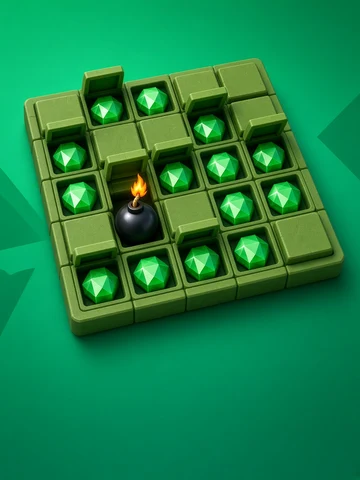
How Mines works on a 5×5 grid: the chance of each safe pick, the multiplier formula, tables for 1 to 10 mines, and why cashing out early or late costs the same.
Why a Plinko ball usually lands near the middle: exact slot chances for 8 and 16 rows, what the risk levels change, and where the game comes from.
How online dice works: 10,000 rolls from 0.00 to 99.99, how your target sets the chance, why the multiplier is (1 − edge) / chance, and a worked table.
How the 15-slot T, CT and bonus wheel works, what the 2× and 14× payouts mean for your odds, how it compares with casino roulette and how to check a round.
How a crash round works, the chance of reaching any multiplier, instant busts, auto cash-out, and how each round's crash point can be checked.
Martingale, Paroli, D'Alembert, Fibonacci and Labouchère put to exact math and simulation: losing streaks, the bets they force and an edge that never moves.
Expected value, RTP and the house edge worked out for roulette, a 15-slot wheel, dice, 9/6 Jacks or Better and blackjack, and what they mean per session.
What the drand beacon and the League of Entropy are, how threshold signatures make a random value nobody knows early, and how a hash chain uses it.
A worked check of one dice bet with real numbers: compare the seed with its SHA-256 commitment, recompute the HMAC and turn bytes into a roll.
How a provably fair game locks in a hidden server seed, mixes in your client seed and a nonce, and what the check does and doesn't prove.
Why a streak can't change the next bet, the 1913 Monte Carlo story, the hot hand, and worked odds for losing streaks and short sessions.
How deposit, loss and wager limits, cooling-off periods and self-exclusion work, why to set them before you play, the warning signs and where to get help.
How Britain's gambling regulator decided that cashable skins are money's worth, why the FutGalaxy owners were convicted in 2017, and where loot boxes stand.
What Belgian and Dutch regulators decided about loot boxes in 2018, what Valve switched off, the Dutch court ruling and the X-ray scanner.
Why regulators treat cashable skins as things of value, how licences and age limits work, what Valve's terms say and why the answer depends on your country.
The 2014 iBUYPOWER vs NetcodeGuides match, the skin bets placed on it, Valve's 2015 bans and which of the banned players have since been cleared.
A beginner's guide to CS2 skin gambling: why skins work as stakes, how deposits and withdrawals work, the common games, the house edge and the risks.
What Valve said about skin gambling sites in July 2016, the letters it sent, the lawsuits and the Washington regulator's demand, and what it all changed.
How two YouTubers promoted a CS:GO skin gambling site they owned without saying so, how it came out in 2016, and what the FTC settlement required.
How CS:GO skins turned into gambling stakes: the 2013 Arms Deal, match betting, jackpot sites, Valve's 2016 crackdown, CS2 and the trading rules since.