Valve's 2013 Arms Deal update: how CS:GO got skins, cases and keys
How the August 2013 Arms Deal update brought drops, weapon cases, keys and Market sales to CS:GO, and how key sales helped build the first Major's prize pool.
Fact-checked 23 October 2026 · 8 sourcesCounter-Strike: Global Offensive got its first weapon skins on 14 August 2013, in a patch Valve called the Arms Deal update. With the skins came weapon cases that open only with a key, the right to trade all of it or sell it on the Steam Community Market, and a promise that part of the money from eSports case keys would go to tournament prizes. This is what shipped, what Valve said it was for, and what grew out of it.
CS:GO before the update
CS:GO had been out for almost exactly a year when the update arrived. Looking back in 2015, PC Gamer wrote that for that first year it "wasn't even the most popular version of Counter-Strike", and put the average number of people playing it in August 2013 at 25,961.
The new system borrowed the item drops of Team Fortress 2, an earlier Valve game. Steam already had the plumbing. When Valve opened the Steam Community Market in beta on 12 December 2012, for Team Fortress 2 items only, it said players were already making more than half a million trades a week and that other games would join in the new year.
On the Market, players sell items to each other for Steam Wallet funds, which Valve pitched as a way to turn play into funds for new items and games. CS:GO joined it with the Arms Deal update, which Valve's FAQ said let players collect, buy, sell and trade decorated weapons for the first time.
What shipped on 14 August 2013
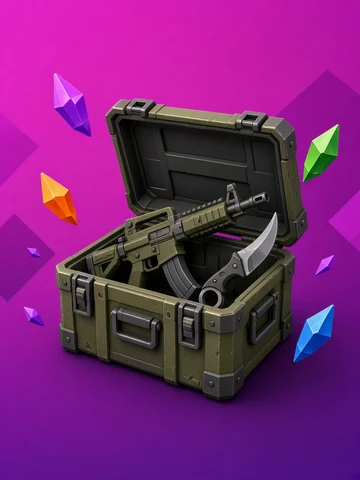
Valve's release notes listed ten weapon collections, and its update page counted more than 100 finishes across them. Two of the collections came in cases, the CS:GO Weapon Case and the eSports Weapon Case, and the other eight were named after maps such as Dust, Inferno and Nuke. Valve billed the CS:GO Weapon Case as the first in a series of limited-edition cases.
The FAQ gave four ways to get a decorated weapon: timed drops while playing on official or community servers, opening a dropped case with a key, trading through Steam, or buying from another player on the Market. Drops were tied to play time over a week. The more you played, the slower they came, until the rate reset when the week rolled over.
Cases came through those same drops, but opening one took a key, bought in the game or traded from another player. A case could hold one of the new knives or a StatTrak weapon, which keeps a running count of your kills with it, and StatTrak weapons came only from cases. Everything was tradable, and the FAQ said "all Arms Deal weapons, crates, and keys" could now be sold on the Market.
Each decorated weapon had its own finish and exterior condition, the wear explained in CS2 skin rarity and float values, and could be inspected in the game, the Steam inventory, the Market or a trade window. A new inspect key, F by default, let you look over the weapon in your hands mid-match; PC Gamer later noted that doing so became a kind of taunt.
Valve's FAQ was firm on two points. The items were "purely cosmetic" and bought no advantage, and the update did not make CS:GO free to play: it was aimed at rewarding people who already owned the game. The same patch made the silenced M4A1 and USP from earlier Counter-Strike games standard weapons, and Valve said a Workshop for player-made finishes would follow "in the near future".
The eSports case and the first Major
The eSports Weapon Case had its own key, and Valve said a portion of the money from those keys would go to prize pools at community CS:GO tournaments. None of the 2013 announcements said how large that portion was.
On 16 September 2013 Valve announced a $250,000 community-funded prize pool for the 2013 DreamHack SteelSeries CS:GO Championship. It said the crowdfunding had begun with the Arms Deal update, that the championship would be one of the largest cash awards in Counter-Strike's history, and that the scheme was meant to fuel prize pools at other events too.
The championship ran at DreamHack Winter in Jönköping, Sweden, from 28 to 30 November 2013, and is counted as the first CS:GO Major; DreamHack organised it and Valve sponsored it. Sixteen teams took part, and Fnatic beat Ninjas in Pyjamas 2–1 in the final. The pool was split like this:
| Place | Teams | Prize per team | Total |
|---|---|---|---|
| 1st: Fnatic | 1 | $100,000 | $100,000 |
| 2nd: Ninjas in Pyjamas | 1 | $50,000 | $50,000 |
| 3rd–4th | 2 | $22,000 | $44,000 |
| 5th–8th | 4 | $10,000 | $40,000 |
| 9th–16th | 8 | $2,000 | $16,000 |
| All places | 16 | $250,000 |
What it set off
PC Gamer's 2015 feature tied the drops to CS:GO's rise, noting that their arrival "coincides with the game permanently overtaking its older siblings". It put the average number of people playing in August 2015 at 357,535, which it called 14 times the 2013 figure (357,535 ÷ 25,961 ≈ 13.8). Former pro Tomi "lurppis" Kovanen, a PC Gamer contributor, went further: "the addition of the skins has been the most important development in CS:GO's history, bar none."
ESPN told the story from another angle in 2017. Seven months after the update, it reported, 150,000 people were playing at once, six times as many as a year earlier. It described opening a case as buying a $2.49 key that sets off a slot-machine spin to decide which skin you keep, and noted that Valve takes a 15% fee each time a skin is bought or sold on its marketplace.
Market sales paid out in Steam Wallet funds, not cash. Outside sites used bots, automated programs, to move skins off Steam, and ESPN wrote that there they could be cashed out for real money. The skin trade, it added, drew in entrepreneurs who saw another use for skins: betting. The history of CS:GO gambling follows that thread from match betting to Valve's 2016 crackdown.
What is left of it in CS2
Most of the 2013 design carried over. Weapon cases still open with a key bought from Valve, finishes still carry a wear condition, and skins still trade and sell on the Market. Keys are the exception: the 2013 FAQ made them sellable, but since 28 October 2019 a key bought in the game can't leave the account that bought it, as Valve's 2019 key change explains.
None of the 2013 announcements said what the odds inside a case were. Official figures came later, released for China to comply with Chinese law, and CS2 case odds sets them out grade by grade.
Whatever the reel shows, a key buys a random draw whose average result is set by those odds. Casino games work the same way: the house edge is the share of each bet the house keeps on average, and every game on cs2.casino displays it alongside the bet limits. Over time the house wins.
Cases on cs2.casino use numbered tickets. An opening draws ticket floor(float × 100000) + 1, each item covers its own range of ticket numbers, and the case version's odds hash commits to all of those ranges, so you can verify an opening once the seed pair is rotated. Limits on your account can cap deposits, losses or wagers over a rolling day, week or month.
Sources
- Counter-Strike: Global Offensive Update Released (8/14/2013) — Steam News
- Arms Deal FAQ, August 2013 — Counter-Strike blog via Wayback Machine
- Arms Deal — counter-strike.net
- Steam Community Market Now In Beta — Steam News
- 2013 DreamHack SteelSeries CS:GO Championship — Counter-Strike blog
- DreamHack Winter 2013 — Wikipedia
- How $400 virtual knives saved Counter-Strike — PC Gamer
- How Counter-Strike turned a teenager into a compulsive gambler — ESPN